

The Cost of Cyber Attacks: Why Outsourcing Your SOC Makes Financial Sense
- News
According to a number of recent reports, organisations of all kinds are finding themselves increasingly vulnerable to digital threats. The data around the financial impact of cyberattacks is staggering, with the average cost of an incident in the UK surpassing £620,000. This figure includes direct financial losses, recovery expenses, and regulatory fines, creating a heavy burden for institutions already grappling with limited budgets. Globally, the picture is even bleaker, as 79% of institutions reported ransomware attacks in the past year, with severe breaches driving the average cost of such incidents to an astonishing £2.85 million in 2023. To emphasise the scale of the issue further, a separate report from the UK Government’s Department of Science, Innovation and Technology, found that public sector institutions “typically report a higher level of board engagement with cyber security than the average UK business. In this sense, they are more like large businesses.”
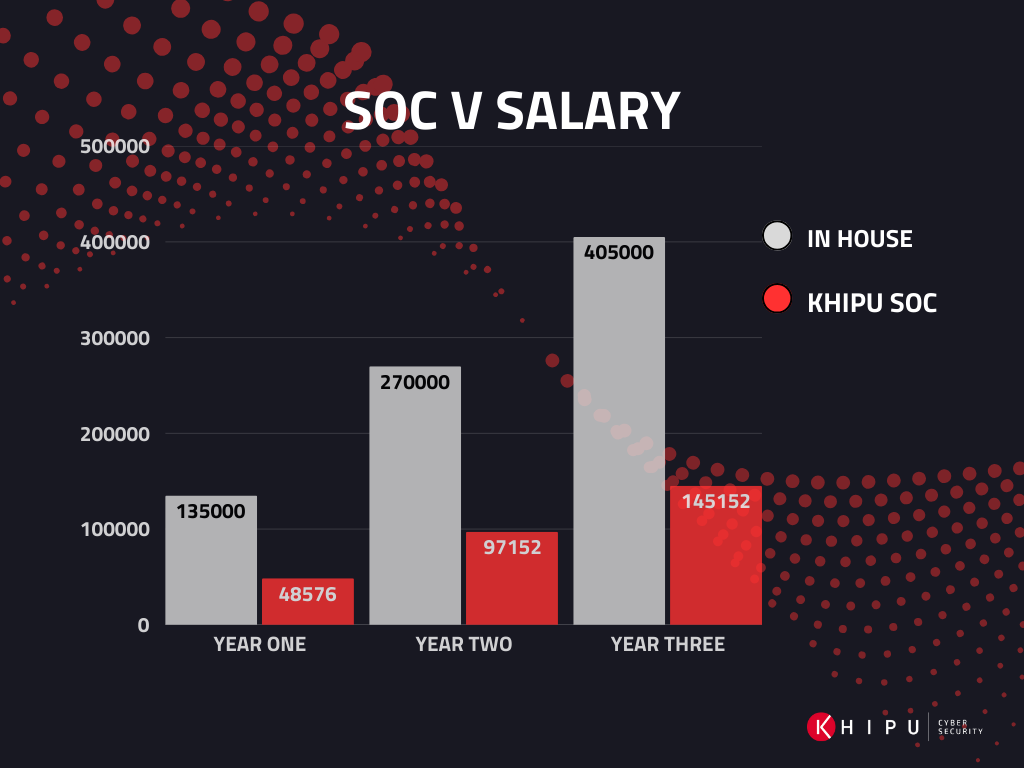
Amid this alarming rise in cyber threats, many organisations from across the private and public sectors have been forced to contemplate the formation of an in-house Security Operations Centre (SOC) to safeguard their digital assets. However, the financial realities of building and maintaining such a facility are daunting. The process begins with the recruitment of cybersecurity analysts, whose expertise is crucial for 24×7 monitoring and incident response. Yet, these professionals command high salaries, with entry-level positions in the education sector starting at around £45,000 per annum. To ensure continuous coverage, institutions would need to employ between three and five analysts, bringing the total annual salary expense to £225,000 per annum. This figure excludes additional costs such as overtime, benefits, and the salaries of managers and support staff, which further inflate the financial burden.
The challenge of recruitment compounds the financial strain. The cybersecurity talent pool is shrinking, making it increasingly difficult for organisations to find qualified professionals. The hiring process is not only time-consuming but also expensive, involving significant resources to attract and secure top talent. Once onboarded, retaining these experts presents another formidable hurdle. The private sector, with its ability to offer higher salaries and more attractive benefits, frequently lures away skilled cybersecurity professionals, leaving the public sector in a perpetual cycle of hiring and training new staff.
Beyond personnel costs, establishing an in-house SOC necessitates substantial investment in infrastructure and technology. Institutions must procure advanced cybersecurity tools, including security information and event management (SIEM) systems, threat intelligence feeds, and incident response capabilities. Additionally, a dedicated physical space for the SOC, equipped with state-of-the-art facilities, is essential. These infrastructure requirements add another layer of complexity and expense, further challenging the feasibility of maintaining an in-house SOC.
Charlie Davis, IT Manager at Barton Peveril Sixth Form College, and KHIPU SOC customer, encapsulates the predicament faced by many educational institutions.
“Skilled SOC analysts are hard to find, and even if we managed to hire them, they wouldn’t stay long when they could earn much more in the private sector. Outsourcing to KHIPU solves that problem entirely and is a far more sustainable option for us,” he explains. Davis’s experience highlights a critical advantage of outsourcing: the ability to bypass the recruitment and retention challenges that plague in-house SOC operations.
A compelling alternative
Outsourcing to a Managed SOC Service, such as the one offered by KHIPU Networks, emerges as a compelling alternative. For an annual cost of just £48,576—based on 300 endpoints—institutions can leverage KHIPU’s expertise and infrastructure without the associated overheads of an in-house team. This cost-effective solution provides continuous monitoring and protection, with certified cybersecurity experts managing the security operations around the clock. KHIPU’s service also includes comprehensive cybersecurity tools, proactive threat hunting supported by industry-leading intelligence feeds, and access to a resilient, fully equipped SOC facility.
The financial benefits of outsourcing are clear. With a managed SOC service, organisations can save an average of £137,265 [*based on KHIPU SOC pricing] annually compared to maintaining an in-house SOC. These savings are achieved without compromising on the quality of security, as institutions gain access to advanced tools and expertise that would be prohibitively expensive to replicate internally.
Moreover, outsourcing ensures stability and effectiveness. Organisations no longer need to worry about the continuous cycle of recruiting, training, and retaining cybersecurity professionals. Instead, they can rely on KHIPU’s dedicated team to provide robust protection, allowing internal IT staff to focus on other critical areas of technology management.
The decision to outsource SOC services is not merely a financial one; it is a strategic move to enhance an institution’s security posture while optimising resource allocation. By entrusting cybersecurity to experts like KHIPU Networks, organisations can better protect their digital environments from the escalating threats of cybercrime, all while managing their budgets more effectively.
As cyber threats continue to evolve, the importance of robust security measures cannot be overstated. For organisations, outsourcing SOC services offers a path to secure their networks without the prohibitive costs and challenges of an in-house setup. KHIPU’s Managed SOC Service stands out as a practical, sustainable solution, providing comprehensive protection and significant cost savings in an era where every penny counts.
To explore how KHIPU’s Managed SOC Service can protect your organisation and reduce costs, contact us today. Let us help you navigate the complexities of cybersecurity, ensuring your institution remains secure in the face of ever-present digital threats.